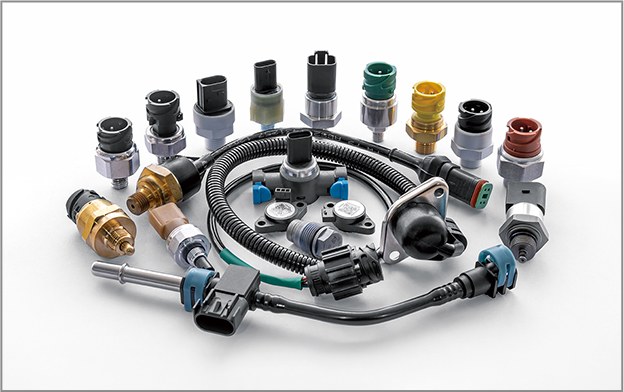
Each sensor has its own advantages and disadvantages. The main advantages of thermistors are:
Sensitivity: Thermistors can vary with very small temperature changes.
Accuracy: Thermistors can provide high absolute accuracy and error.
Cost: For high-performance thermistors, their cost-effectiveness is high.
Robustness: The construction of the thermistor makes it very sturdy and durable.
Flexibility: Thermistors can be configured in various physical forms, including extremely small packaging.
Sealing: Glass encapsulation provides a sealed packaging to prevent sensor failure caused by moisture.
Surface installation: Provides various sizes and resistance tolerances.
Among the disadvantages of thermistors, automatic heating is usually the only design consideration. Appropriate measures must be taken to limit the induced current to a sufficiently low value in order to reduce automatic heating errors to an acceptable level.
Nonlinear problems can be solved through software or circuits, and moisture problems that can cause faults can be solved through glass packaging.